
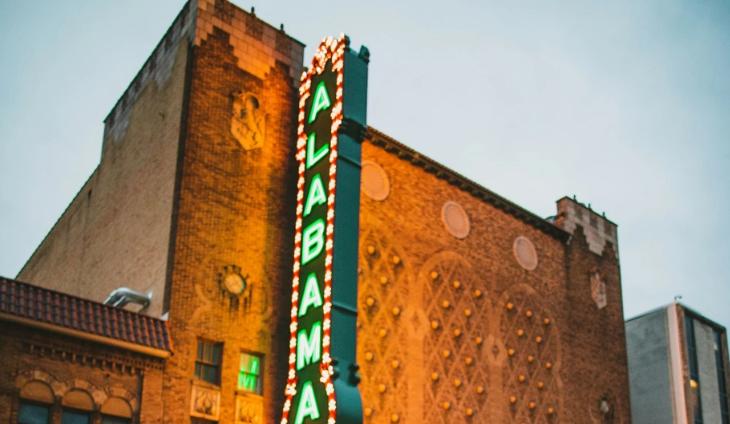
As the Alabama Legislature opened its 2026 session on Tuesday, gambling appears set to be absent from the agenda for the first time in several years. State legislative leaders have indicated that there is insufficient support to advance any gambling-related proposals this year.
The subdued outlook follows comments made last year by Senator Greg Albritton, a leading advocate for gambling expansion, who suggested that the failure to pass legislation in 2025 may have set the issue back by as much as two decades.
Senate President Pro Tem Garlan Gudger said lawmakers will gauge interest during their first caucus meeting on 13 January, with discussions expected to continue through the end of the month. However, he expressed little optimism about the issue moving forward. “If I had to go with my gut right now, I would say it’s not going to come up this year,” Gudger told AL.com.
House Speaker Nathaniel Ledbetter, who spearheaded a gambling reform package in 2024, said any renewed effort would need to originate in the Senate. He reiterated that position again this year, noting that no such proposal is currently under consideration.
“We don’t have anything on our end,” Ledbetter said. “It would have to come from the Senate first. I’ve spoken with [Gudger] several times, and it hasn’t come up.”
Alabama’s inaction on gambling issues
Alabama remains one of only five US states without a lottery, and any move to introduce a lottery or broaden gambling would require a constitutional amendment. Such an amendment must secure a two-thirds majority in both legislative chambers before being put to voters in a statewide referendum.
There has been progress in the past. In 2024, House Speaker Nathaniel Ledbetter advanced a comprehensive gambling proposal that included a state lottery, casinos and sports betting, along with a gaming compact involving the Poarch Band of Creek Indians. While the package cleared the House, it fell short by a single vote in the Senate.
Senator Greg Albritton, a longtime supporter of gambling reform, opted not to introduce legislation last year, citing a lack of sufficient backing. He has again decided not to sponsor a proposal this year.
Industry sources say one of the key sticking points for lawmakers continues to be how gambling tax revenues would be allocated.
Alabama voters last weighed in on a lottery in 1999, when the proposal was defeated by a margin of 54% to 46%.
After years of legislative gridlock, the Poarch Band of Creek Indians has begun dedicating more resources to gambling-related advocacy, aiming to refine its message to lawmakers. In 2024, the tribe purchased the Birmingham Race Course and retained lobbying firm Fine Geddie to support its efforts.
Governor supports gambling expansion
Governor Kay Ivey has consistently supported giving Alabama voters the opportunity to decide on gambling-related issues at the ballot box. Over the years, she has backed several proposals and has spoken publicly after legislative attempts failed to advance.
In 2022, Ivey expressed frustration over the Legislature’s inability to pass a gambling bill. “I was disappointed they couldn’t get it through,” she said. “It’s not that I’m strongly pro-gambling, but I believe the people of Alabama should be allowed to make that choice themselves. I wish lawmakers had approved it so voters could decide in November.”
Ivey also took action in 2020 by establishing a special committee to study gaming. The committee’s report estimated that a broad gambling package could bring in as much as $800 million in annual revenue.
Given the repeated setbacks, Senator Greg Albritton has noted that meaningful progress on gambling reform will likely require strong backing from the governor.
Gubernatorial candidates push gaming
With a gubernatorial election scheduled for November that will ensure Alabama has a new governor in 2027, prospective candidates are increasingly weighing in on the issue of gambling. As with Governor Kay Ivey, several hopefuls have begun outlining their positions.
Republican US Senator Tommy Tuberville said he believes Alabama voters should have the final say. Speaking on The Jeff Poor Show, Tuberville noted that residents express interest in a wide range of gaming options, including a lottery, casinos, sports betting, and horse and dog racing. He argued that state leaders should carefully study the issue, clearly explain both the benefits and drawbacks, and then allow the public to decide. “That’s what a governor should do,” Tuberville said. “Lay out what’s good and what’s bad, and then let people vote.”
Former Democratic US Senator Doug Jones has also voiced support for change, saying in a social media post that he would advocate for the creation of a state lottery. Jones said Alabama is forgoing significant revenue by maintaining the status quo, adding that the state should hold a vote on a lottery as soon as possible.
Meanwhile, Democratic state Representative Phillip Ensler, who announced his bid for lieutenant governor last month, said he would use the executive office to advance gambling legislation aimed at funding critical state services. Speaking to Alabama Political Reporter, Ensler said he regularly hears from people across political, racial, and economic lines who find it unreasonable that Alabama still lacks a lottery. He added that residents frequently cross state borders to purchase tickets, costing Alabama hundreds of millions of dollars that could otherwise support education and healthcare.


