
India Chief Justice Surya Kant has postponed a legal challenge to the nation’s ban on real-money gaming (RMG), moving the hearings to early 2026.
During Thursday’s session, Head Digital Works (HDW), the operator of A23 Rummy, urged the court to expedite the case. Kant noted that the matter would “likely” be taken up by a three-judge bench next month, but despite repeated requests from lawyers representing RMG companies, he declined to advance the schedule.
“Everything is closed,” Kant said. “We will list it in January. That is my assurance.”
Protection or ‘paternalism’?
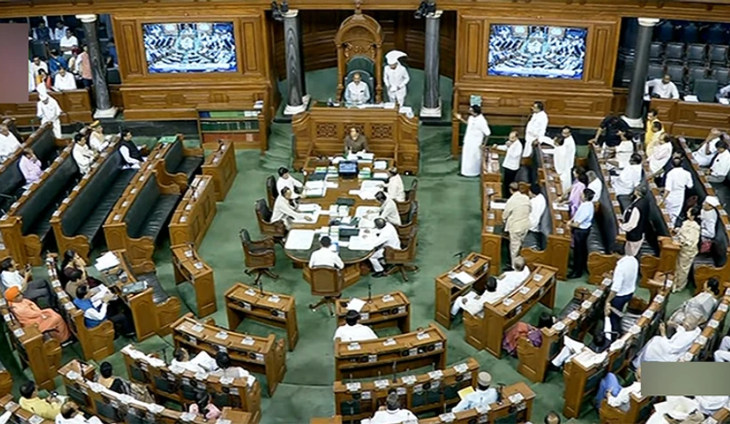
In August, Parliament approved the Promotion and Regulation of Online Gaming Act (PROGA). Passed with little debate and almost no consultation with industry stakeholders, the law effectively shut down all real-money gaming platforms in India, disrupting a sector valued at Rs230 billion (US$2.75 billion). A23 has criticised the legislation as a “product of state paternalism” and has asked the Supreme Court to strike it down as unconstitutional.
Supporters of the ban, however, argue that the measure is necessary to protect vulnerable users from exploitation. The Centre for the Promotion and Regulation of Online Gaming has claimed that the “unchecked expansion” of RMG has been linked to financial fraud, money laundering, tax evasion, and even the financing of terrorism.
Lok Sabha member Bansuri Swaraj said the law “unmasked the wolf for what it is,” describing RMG as a harmful influence that erodes social well-being.
“For years, this masquerade thrived in the grey areas of the law,” Swaraj wrote in The Week. She added that PROGA prevents RMG companies from “[hiding] behind the fig leaf of ‘skill’.”
Survey: Punters moving to offshore sites
PROGA bans all apps and online platforms that offer money-based gaming or related services. The law does not differentiate between games of chance and those that involve skill, such as fantasy sports.
Jaya Chahar, founder and CEO of JCDC Sports, cautioned that the ban “pushes fan engagement away from regulated Indian platforms and into unregulated offshore sites, which goes against the goal of consumer protection.”
A survey referenced by the Economic Times appears to support this concern. Before the ban, only 3.4% of users spent more than two hours on offshore platforms. After the ban, that number surged to 44%. Users also reported spending more time overall on these offshore sites.
According to the survey, “This increase in repeated, high-frequency play aligns with findings that offshore platforms are seen as extremely easy for deposits and withdrawals. About 93.7% of respondents rated the process as easy or very easy — allowing players to re-enter games multiple times a day.”
Meanwhile, by mid-November, banned RMG platforms had reportedly accumulated asset write-downs exceeding $840 million, and an estimated 7,000 workers in India had lost their jobs.


