
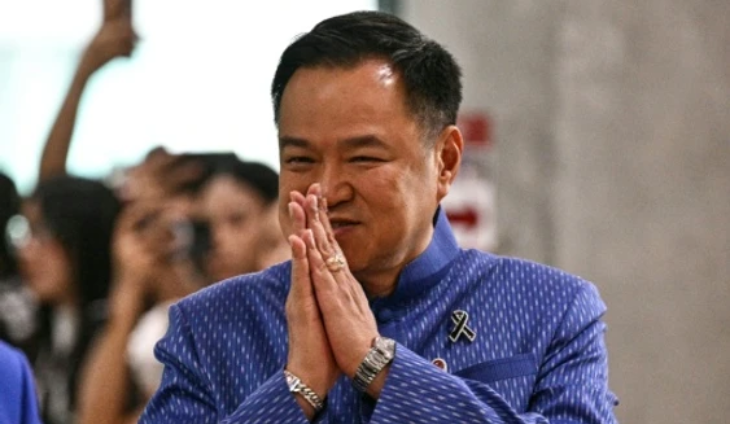
On Thursday, Thailand’s House of Representatives elected Anutin Charnvirakul as the nation’s 32nd prime minister after his win in the February general election. Securing 293 votes, the Bhumjaithai Party leader decisively defeated Natthaphong Ruengpanyawut of the People’s Party, who garnered 119 votes.
Anutin had already been serving in an interim capacity since last September, following the removal of former prime minister Paetongtarn Shinawatra over ethics violations. His return has effectively stalled prospects for reviving the Integrated Entertainment Business Act, a key initiative strongly supported by his predecessor.
Paetongtarn, alongside her father, influential political figure and former prime minister Thaksin Shinawatra, promoted casino development as a strategy to revitalize post-pandemic tourism, draw foreign investment, and generate employment. Her administration had outlined plans for an initial rollout of five casino sites: two in Bangkok, and one each in Pattaya, Chiang Mai, and Phuket.
The call that killed the IR bill
The plan unraveled after Paetongtarn Shinawatra held a phone call with Hun Sen regarding a deadly border clash between Thailand and Cambodia. During the 17-minute conversation, which was later leaked to the public, she openly criticized her own military and referred to Hun Sen as “uncle.” She also added, “If you want anything, just tell me, and I’ll take care of it.”
The leak triggered widespread public backlash. Thousands of protesters assembled outside Government House in Bangkok, calling for her resignation. Her approval rating plunged to just 9.2%, and within months, she was removed from office, paving the way for Anutin Charnvirakul to take over.
From the outset, the new prime minister made it clear that legal casino development would have to wait for a future administration. In contrast to supporters of the Integrated Resort bill, he argued that legalized gambling could harm Thailand’s primary tourism market—China.
During a meeting in November 2025 with Xi Jinping, Anutin reportedly assured the Chinese leader that casino plans would be shelved for the duration of his term. In exchange, Xi pledged to encourage increased travel to Thailand by Chinese tourists.
Support for Thailand casinos = ‘political suicide’
Attracted by a projected THB263 billion ($8 billion) market, leading global gaming operators had been preparing to compete for a Thai casino license. The lineup included all six Macau concessionaires: SJM Holdings, Melco Resorts & Entertainment, Galaxy Entertainment Group, MGM Resorts International, Wynn Resorts, and Las Vegas Sands. At least one of them, Melco, had already set up an office in Bangkok to support its bid preparations.
However, not all operators were convinced. In mid-2025, Jim Allen, chairman of Hard Rock International, stated that the company had “zero interest” in pursuing a Thai integrated resort project, citing concerns over political instability.
Industry experts share a similar view. Ben Lee, managing partner of IGamix, told iGB that Thailand’s gaming push has effectively stalled. He noted that long-standing social resistance to gambling within the country’s predominantly Buddhism-influenced population has persisted, making the issue politically untenable.


